Keep Food Simple

Category: Projects

  • Walnuts and Hazelnuts as a part of the Dutch diet

    Walnuts and Hazelnuts as a part of the Dutch diet

    Nuts are of great importance to a healthy diet. Moreover, there is an increasing interest in growing walnuts and hazelnuts locally, supported by the Dutch Association for Nuts. Focus is on both fresh nuts as well as on nuts processed into food products. Keep Food Simple provides technological assistance.

    Local production
    The main sources of walnuts and hazelnuts are the United States and Turkey. To increase local production in the Netherlands, the growing of nuts as a part of circular agriculture has become an important challenge. This includes questions about the choice of cultivars, production volumes and quality as well as the design of short supply chains.

    Consumer preferences
    In order to establish consumer preferences, an MSc student of Maastricht University has made a critical evaluation of this literature.

    Together with its partners, Keep Food Simple will take the next steps to further support locally grown walnuts and hazelnuts. The focus is on technological opportunities, maximising consumer acceptance and nutritional value.

  • Chicory roots as a basis for a drink?

    Chicory roots as a basis for a drink?

    Chicory (witlof) denotes the blanched, tight heads produced by forcing or growing in darkness from chicory roots. These roots have previously been harvested from the open field and kept at oC.

    Potential of the chicory root
    In the Netherlands, around 50,000 tons of chicory are produced, with the tap roots remaining.
    As early as the 1980s, experiments were carried out in search of possibilities for using those roots.
    The process of breaking down the root cell walls using enzymes is well known. We also know what happens to carbohydrates and bitter substances during this liquefaction.
    A consumer panel found the juice obtained after flavouring with sugar and acid acceptable.
    But since then, as far as we know, nothing has been done with this approach. For example, there was no interest from the soft drinks industry.

    KFS approach
    KFS was recently approached by Leen-Jan and Leonard Reedijk, owners of Nieuw Bonaventura where they grow biodynamic chicory. They asked KFS to help with the value of the chicory roots.
    Keep Food Simple then called in Ashley Price. She graduated from HAS University of Applied Sciences and sees this project as a wonderful opportunity for a learning trajectory when starting her own consultancy company.
    The project starts with an update on new scientific literature on this topic. This is followed by a work plan for and implementation of the processing of chicory roots into a semi-finished product for bitter juices.
    Naturally, circular agriculture and sustainability and the fullest possible processing of the root while preserving the naturally present nutrients are central to this.

  • Spent grains as an ingredient in food applications

    Spent grains as an ingredient in food applications

    Spent grains remain after the extraction of wort from malt in beer production. In The Netherlands 0.5 million tons of spent grains are produced annually.

    The composition
    Spent grains mainly contain seed husk, pericarp, and chaff of the sprouted barley. These are composed of cellulose, arabinoxylans, proteins, lignin, lipid, and minerals. The fibre fraction of spent grains consists mainly arabinoxylans.
    The spent grains are also rich in polyphenols, with a high concentration of ferulic acid.
    The amounts in spent grains are considerable and so it has potential as a source of dietary fibre and protein.

    The application
    Large quantities of spent grains are obtained in beer brewing and are predominantly used as animal feed.
    However, spent grains could also be applied as a high-quality ingredient in food preparation. Consumers would then benefit from its healthy properties – fibre and protein.
    Spent grains are already applied in the preparation of bread and baked products. As an ingredient they also have potential to replace animal proteins in existing food products.

    Taking advantage of the potential
    Keep Food Simple and MaGie Creations have started to co-operate to optimise the technological, nutritional and health properties of spent grains.
    The aim is to use the spent grains as a “whole” ingredient, i.e., without fractionation.

    The project
    Fibres in spent grains are present in crystalline, amorphous, and soluble forms. To improve their technological functionality and nutritional value, our activities are focused on enzymatic modification of the fibre. This can be done by reducing the molecular weight via controlled enzymatic degradation. Keep Food Simple and MaGie Creations are also looking into the benefits of converting the fibre to (arabino)xylo-oligosaccharides.

  • Cabbage stalks

    Cabbage stalks

    In The Netherlands 100,000 tonnes of white cabbage are grown annually of which the largest part is processed into sauerkraut. After shredding, 15,000 tons remain as stalks and are fed to cattle.

    Preservation of nutritional value
    Both the shredded parts as well as the stalks are similar in nutritional value. The stalks are hard and fibrous due to the presence of lignocellulose in the cell wall. Therefore these stalks are unsuitable for the lactic acid fermentation process which is the core of the sauerkraut production.

    In order to be able to use the stalks in regular sauerkraut production, KFS has suggested to treat these with cell wall modifying enzymes. Background knowledge and expertise is available through the co-operation between KFS and Prof Henk Schols, Chair of Food Chemistry at Wageningen University.

    Next steps
    The first tests were executed by the students of HAS Den Bosch, Netherlands as a part of their graduate research programme, and the results were most encouraging . The next step is the design of a process as well as a cost evaluation together with FoodTechBrainport, Helmond, Netherlands and a Dutch sauerkraut producer. This will largely determine the feasibility of this project in day-to-day sauerkraut production.

  • Oats: new perspectives for food and agriculture?

    Oats: new perspectives for food and agriculture?

    Unique benefits

    Oats are known to fit into a healthy food diet: they have a saturating effect, increase resistance to diseases, decrease blood cholesterol and stabilise blood sugar levels. Moreover, oats are important as a part of a gluten-free diet.

    Next to these, oats are also of great significance in circular agriculture and in sustainable crop production and will improve the quality of the soil.

    Bottlenecks

    Despite these benefits, the production of oats has dramatically declined in The Netherlands over the past decades. One of the reasons was that farmers were offered better prices for crops such as wheat and barley. In the meantime, the volume of oats in the Dutch farming sector has become so small that it is more difficult to build up a meaningful and reliable position for food production. Also it has been recognized that both the taste and functional properties of oats could limit the application in a wider range of food products, for instance, bread and pasta.

    Perspective

    Obviously oats deserve a place in society, especially since a transition is needed to sustainable agricultural practices and a healthier and more nutritional diet. The challenge is to develop a revenue model that benefits both farmers and food producers from field to fork. This model should acknowledge the positive characteristics of oats, both in economical value as well as in its societal significance.

    KFS-project

    The purpose of KFS is to process agricultural raw materials as fully as possible into high-quality food ; in other words, less waste, fewer additives and more sustainable practices.

    KFS has set up a ‘Taskforce Oats’ which consists of a group of representatives from farming, processing, marketing, science and technology. Together they represent the oats’ supply chain. In a recently held workshop, potential solutions to improve the perspective for sustainable oat production have been discussed. Currently more concrete solutions are being explored. Contact Caroline van der Horst for the presentations and report of this workshop (in Dutch).

    Read Position Paper Haver – Taksforce Haver 2022 (in Dutch).

    In co-operation with Maastricht University, an MSc thesis has been prepared in order to better understand the drivers and hurdles of oat consumption. Results of this study will become available end of July 2022. Also see https://toekomstvoorhaver.jouwweb.nl (in Dutch).

    Want to know more? Contact Caroline van der Horst.

  • Combinations of Vegetables for Better Health

    Combinations of Vegetables for Better Health

    In the Netherlands, over 1 million people suffer from chronic bowel disorders, one major factor of this being that people do not eat sufficient fibre. Additionally there is growing scientific evidence that not only the amount of fibre but also combinations from different plant sources will determine the beneficial effects. Fibre serves as a substrate for bacteria in the gut producing small bio-active components that have positive effects on the fat and protein metabolism as well as on the immune response.  They also lower the risk of cancer and other chronic diseases.

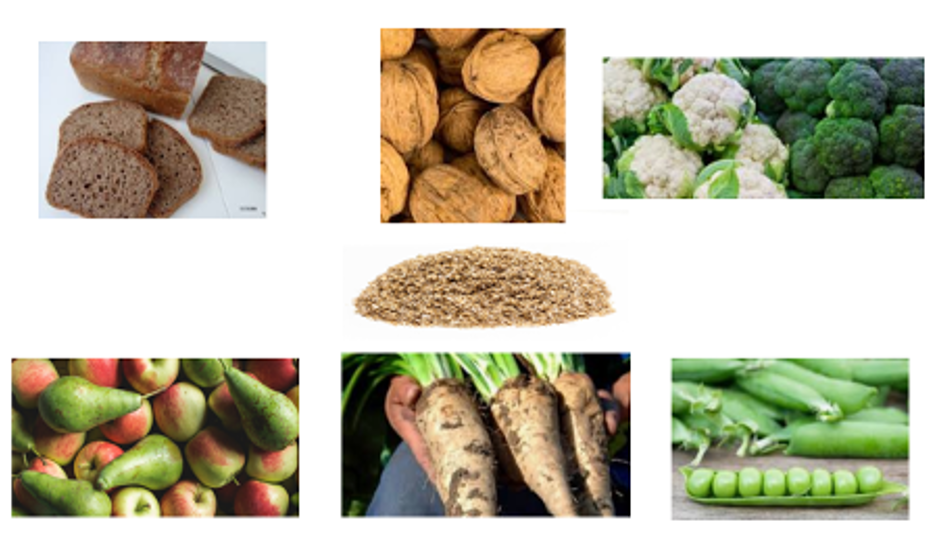
    More research, however, is necessary to substantiate these effects. In our project we will include combinations of beets and carrots, fruits, pulses, cereals and cabbages. Thereby Keep Food Simple aims to support the complete usage of the harvested vegetables. In doing so waste will be minimalised, and the full nutritional benefits will be made more readily available.

    However focus on the importance of eating more fibre-rich food has not led to the desired changes in our consumption pattern. There is not much evidence that the recommended level of a minimum of 35 gr of fibre per day will be reached in the foreseeable future. Neither will the consumption of combinations of plant products be seen as a priority, certainly not in the short term.

    In this project Keep Food Simple has chosen an integrated approach with the focus on both communicating the necessity of eating more and better fibre, as well as providing a real understanding of the effects of fibre on a healthy gut.

    The communication part of our project, which aims at a clearer message on the health benefits of vegetable food products to a wider audience, will be done in alliance with partners with a sizeable outreach to consumers and food professionals.

    Our first partner is Dutch Cuisine. They promote the preparation of good quality food using local ingredients and avoiding waste. Through an impressive group of ambassadors consisting of top restaurants and their chefs, the message of more and better fibre will be made available for professionals as well as for the general public.

    Next Keep Food Simple will also directly communicate our message through presentations and videos using social media.

    The science part will be done in collaboration with our partners in Maastricht and Wageningen Universities. Both have extensive experience in gut health research and the role of fibre.

    The current advice from the Voedingscentrum is: eat 35 grams of fibre per day. If our research confirms the importance of diversity of fibre from different sources, this could lead to the following recommendation by the Netherlands Nutrition Centre: eat fibre-rich complete food from different plant sources, because this is better for keeping your body healthy, with better weight control, resistance against illness but also better mental health.

  • Bell pepper – utilisation of rejects

    Bell pepper – utilisation of rejects

    There is a large waste flow of odd shaped and sized bell  peppers, since there is little or no application. Even as animal feed they are not a success. The idea to do something with these rejects arose during a conversation between FoodTech Brainport, Bodec and Keep Food Simple.

    In the Netherlands, peppers are mainly grown in greenhouses and on artificial soil; in total about 1,350 ha. The quantity produced is about 350,000 tons per year. About 2% of the peppers harvested is lost, 7,000 tons per year!

    In March 2021, a student from Wageningen University and Research will start an internship at Bodec and FoodTech Brainport entitled: The ultilization of bell pepper rejects in foods or food ingredients.  This study pays special attention to carotenoids, capsanthin and the ‘spicy’ substances in the peppers.

  • Legumes

    Legumes

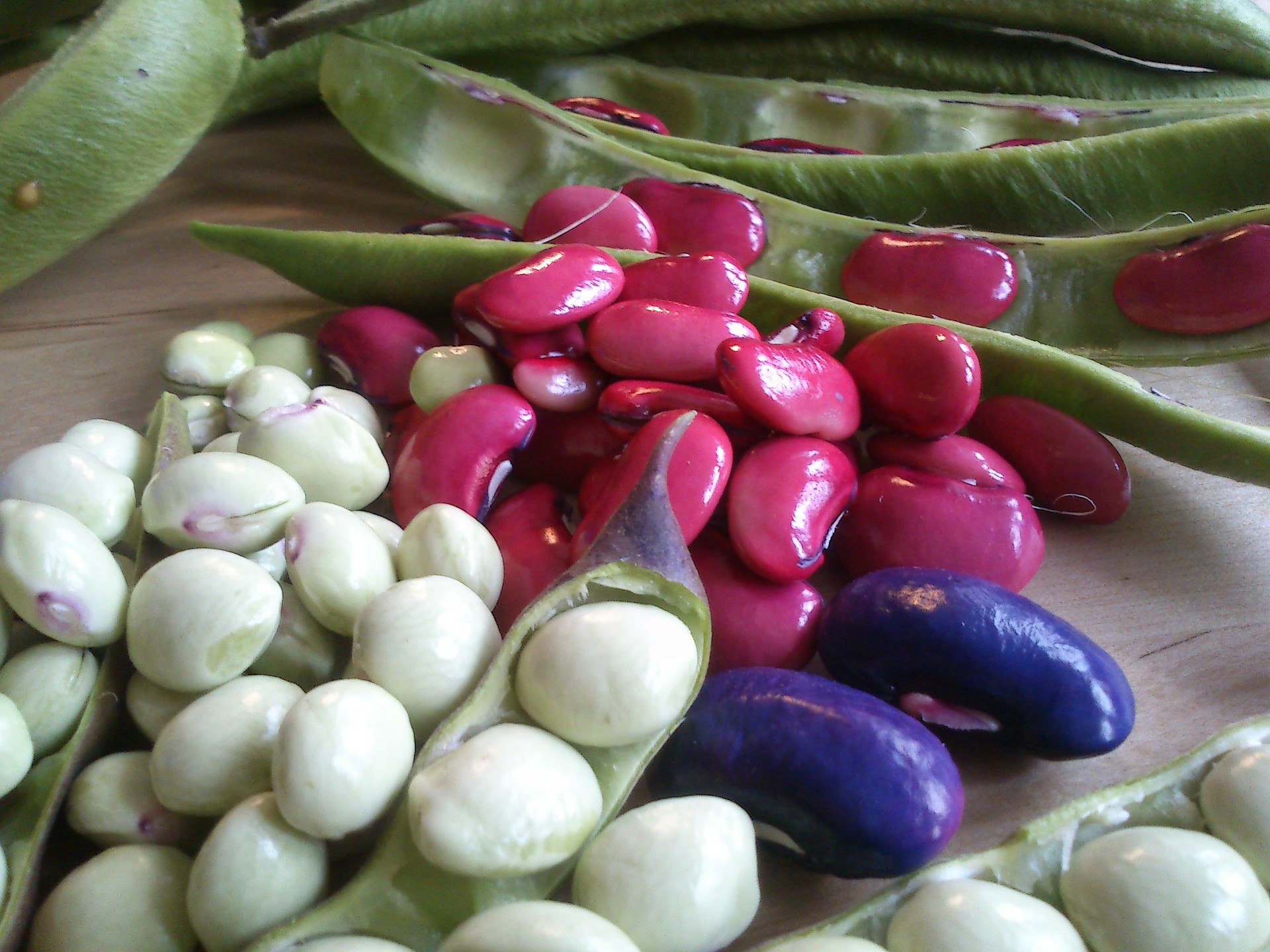
    Legumes have great potential in the transition to a more sustainable agriculture and a more sustainable diet. Unfortunately, legumes also have properties that are often not appreciated by consumers: beany taste, mealy structure and they cause flatulence.

    KFS aims to provide food manufacturers with a decision-making tool to help them choose the right legume type and process to match the desired taste, texture and nutritional values of the product they envision.

    KFS is working on projects with lupins and field beans because they offer the best prospects for Dutch arable farmers and at the same time offer favourable nutritional values.

    Asian cuisine has a centuries old tradition of using such beans as soy, lentils and mung in many dishes and snacks, often in a  fermented form. Pre-fermentation processing has been found to aid the nutritional quality of legumes. Fermentation with Bacillus, mould, Lactic acid bacteria and/or yeast decreases undesirable properties and improves flavour and texture.
    The above has been documented in detail through literary findings (Alyssa Be, 2021, WUR BSc thesis; Eloïse Jennes, 2021, UM MSc thesis).

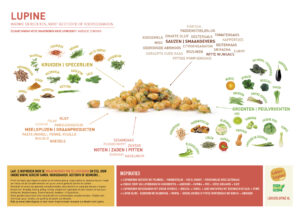
    Angélique Schmeinck made mind maps for Lekker Lupine and Keep Food Simple, two taste buds maps; one for cold preparations and one for hot preparations. Precisely because taste is a critical point with legumes, it is very important to learn how we can make tasty products with legumes. These taste mind maps are a first aid. Lupine-MM-koud Lupine-MM-warm

    The KFS-approach is multidisciplinary and combines

    • knowledge about fermentation processes and microbial strains
    • transformation of raw materials into consumer products by existing and novel processes
    • preparation of tasty foods, fit for consumers’ perception, by experienced chefs
    • nutritional characteristics like amino acid composition, bioavailability of (micro-)nutrients, presence of fibre
    • co-ordination in the supply chain
    • use of legumes grown in North Western Europe

    This approach can only be realized in collaboration with knowledge institutes and innovative companies.

    Partners in this KFS activity: Angélique Schmeinck, Food Tech Brainport, Lekker Lupine, Smaakpark Ede, Universiteit Maastricht, Wageningen University & Research

  • Healthy and Sustainable Tomato Products

    Healthy and Sustainable Tomato Products

    Tomatoes are an important part of consumption patterns worldwide. Annually 150 mln tons of tomatoes are produced around the globe, and that makes tomatoes a major crop. They are not just outstanding in flavour and consistency, they also provide a large variety of nutrients such as lycopene, beta-carotene, potassium and vitamin C.

    About 20% of tomatoes is consumed fresh . 80% is processed and offered to consumers in a variety of products such as paste, sauces and pizzas; during this processing, 40% of the  nutrients are eliminated.

    Keep Food Simple has inititated a research project to explore ways to reduce waste during processing and to create healthier products. Special attention will be given to the effect of processing conditions on the so-called bio-availability of the nutrients in the intestinal system. Ultimately our work should lead to products that are healthy, tasty and affordable.

    The project is executed by a consortium of University Maastricht/Venlo, Bas Cloo (Dutch Cuisine), Wageningen University and Looye Producers. Please contact Fons Voragen (+31 (0)6 30 40 67 31) for further information or contact him through fonsvoragen@keepfoodsimple.nl.

  • Oatelli

    Oatelli

    Oatelli develops tasty and healthy food products that will support the intake of sufficient fibre, using the outside  layer of the oatkernel (oatbran). This is the most nutritious part of the kernel and is a residual part in oat-processing.

    Oatelli uses oatbran because it is rich in vitamins, minerals and fibre. The latter contains a high level of beta-glucanes which are known for their cholesterol reducing properties (at a minimal intake of 3 gram per day), their glycemic index and their saturating effect.

    One of the first products by Oatelli is a pasta based on oatbran. Keep Food Simple supports the development of Oatelli’s products with professional advice and access to a large national and international food network .

    More information: www.oatelli.nl