Keep Food Simple

Author: KeepFoodSimple

  • Collaboration Dutch Cuisine and KFS

    Collaboration Dutch Cuisine and KFS

    In April 2021 Dutch Cuisine and Keep Food Simple signed a co-operation agreement in which we aim to reach a wider audience with a clearer message on the health benefits of vegetable food products.

    Dutch Cuisine promotes the preparation of good quality food using local ingredients and avoiding waste. It is supported by an impressive group of ambassadors consisting of top restaurants and their chefs, for whom a great source of inspiration is traditional recipes. Dutch Cuisine has a large communication platform for professionals as well as the general public.

    Through scientific research Keep Food Simple aims to support the complete usage of the harvested vegetables. In doing so waste will be minimalised, and the full nutritional benefits will be made more readily available. As a part of this work, it has been shown that the regular consumption of combinations of different vegetable products (e.g. beets and carrots, fruits, pulses and legumes, grains and cabbages) has substantial health benefits, giving our body more resilience and making it less susceptible to chronic diseases.

    Together Dutch Cuisine and Keep Food Simple have complementary expertise in a wide field from science and production to communication. Therefore, it is expected that our co-operation will help to make significant steps to better food for everyone.

  • Bell pepper – utilisation of rejects

    Bell pepper – utilisation of rejects

    There is a large waste flow of odd shaped and sized bell  peppers, since there is little or no application. Even as animal feed they are not a success. The idea to do something with these rejects arose during a conversation between FoodTech Brainport, Bodec and Keep Food Simple.

    In the Netherlands, peppers are mainly grown in greenhouses and on artificial soil; in total about 1,350 ha. The quantity produced is about 350,000 tons per year. About 2% of the peppers harvested is lost, 7,000 tons per year!

    In March 2021, a student from Wageningen University and Research will start an internship at Bodec and FoodTech Brainport entitled: The ultilization of bell pepper rejects in foods or food ingredients.  This study pays special attention to carotenoids, capsanthin and the ‘spicy’ substances in the peppers.

  • Collaboration Food Tech Brainport

    Collaboration Food Tech Brainport

    In February 2021 Food Tech Brainport and Keep Food Simple signed a co-operation contract aimed at the joint acquisition and execution of new and innovative research and valorization projects.

    This co-operation is based on the corresponding objectives and complementary competences of both parties. KFS has a wide experience and an extensive network in many areas of Food Science and Technology, both nationally and internationally.

    The strengths of FTB are its state of the art technical facilities, the execution and the further development of projects and the implementation of innovative technologies which have already been proven to work (TRL level 6 to 8).
    This co-operation has begun with a joint project on the utilisation of bell pepper rejects.

  • Fermentation of legumes

    Fermentation of legumes

    In a world striving towards a sustainable future, one’s diet is a highly important aspect which needs improvement. Decreasing meat consumption and incorporating legumes has a great potential to aid in this. Legumes have been consumed since ancient times and are still important to us as they are highly nutritious foods which also contribute to food security and the mitigation of climate change. Unfortunately, consumption remains low due to perceptions regarding taste, structure and gastro-intestinal properties.

    As a part of her Bsc thesis at Wageningen University & Research, Alyssa Be is studying processes on how to reduce these undesirable aspects. A promising method is through fermentation, but the exact influende of this on the properties of legumes is not as yet clear.

    More information on KFS projects can be found here.

  • Flip van Straaten joins KFS Board

    Flip van Straaten joins KFS Board

    In its last meeting of 2020, KFS confirmed the appointment of Flip van Straaten to its board. Flip is a retired biologist, educated at Wageningen, Salk and Cambridge. He specialised in whole grain fibres. He was director of the Dutch Bakery Centre and also worked at Unilever and Meneba. Flip has now completely changed course and is a self-sufficient farmer living on the Linge.

    All six board members look forward to continuing the KFS activities in 2021, and, by doing so, to contribute to practical solutions to the world’s food problems through the promotion of the processing of vegetable agricultural raw materials into high-quality foods.

  • Healthy and Sustainable Tomato Products

    Healthy and Sustainable Tomato Products

    This year Keep Food Simple has started a tomato research and development project. It focuses on improving the bio-availability of nutrients in tomatoes by applying different types of processing. In so doing we aim to reduce waste and find more sustainable and innovative ways to process tomatoes into healthy and tasty products.
    As a part of her MSc Internship Food Quality and Design (Wageningen University and Research), Tania Utami has made a comprehensive literature study of our knowledge of available processing methods and their influence on the quality of tomato products.

    The choice of specific processing methods, such as hot and cold break heating and microwaving, will affect viscosity, flavour, and nutritional content. For instance, because of longer holding times in cold break, endogenous enzymes have time to break down the pectin and the unsaturated fatty acids, which results in lower viscosity and a fresher aroma of the final product. Higher temperatures such as in hot break though, will not only increase the viscosity but also the bio-availability of lycopene, one of the key nutrients in tomatoes.
    High pressure processing will lead to an increase of redness, viscosity and the bio-availability of lycopene.

    Introducing fermentation as a processing method, in combination with one of the methods mentioned before, will support the development of more digestible products, with specific nutritional benefits and more flavour.

    More information on our projects can be found here.

  • Consumers’ perception of authentic bread

    Consumers’ perception of authentic bread

    Industrial bakeries are increasingly producing sourdough bread in response to a call for healthier foods. A longer fermentation process of approximately 24 hours has been shown to be beneficial in this. Additionally a long dough resting time makes the use of additives unnecessary, which is not the case in shorter resting times.

    Customers are generally unaware of the effect of these resting times on the healthiness and authenticity of the bread . Under the guidance of Prof. Caroline Goukens (Maastricht University), Anna van der Scheer made a study of this, together with the effects on buying behaviour.

    Using a random approach, it was concluded that respondents did not perceive a bread product with a longer resting period to be more authentic than that with a shorter period or with no mention of a rest time at all. Interestingly, though, bread with a rest period was perceived to be healthier than bread without. Finally an understanding of the rest period did not lead to a willingness to pay more for the product. So in the future more information and education will be crucial to highlight the benefits of a longer fermentation process.

  • Legumes

    Legumes

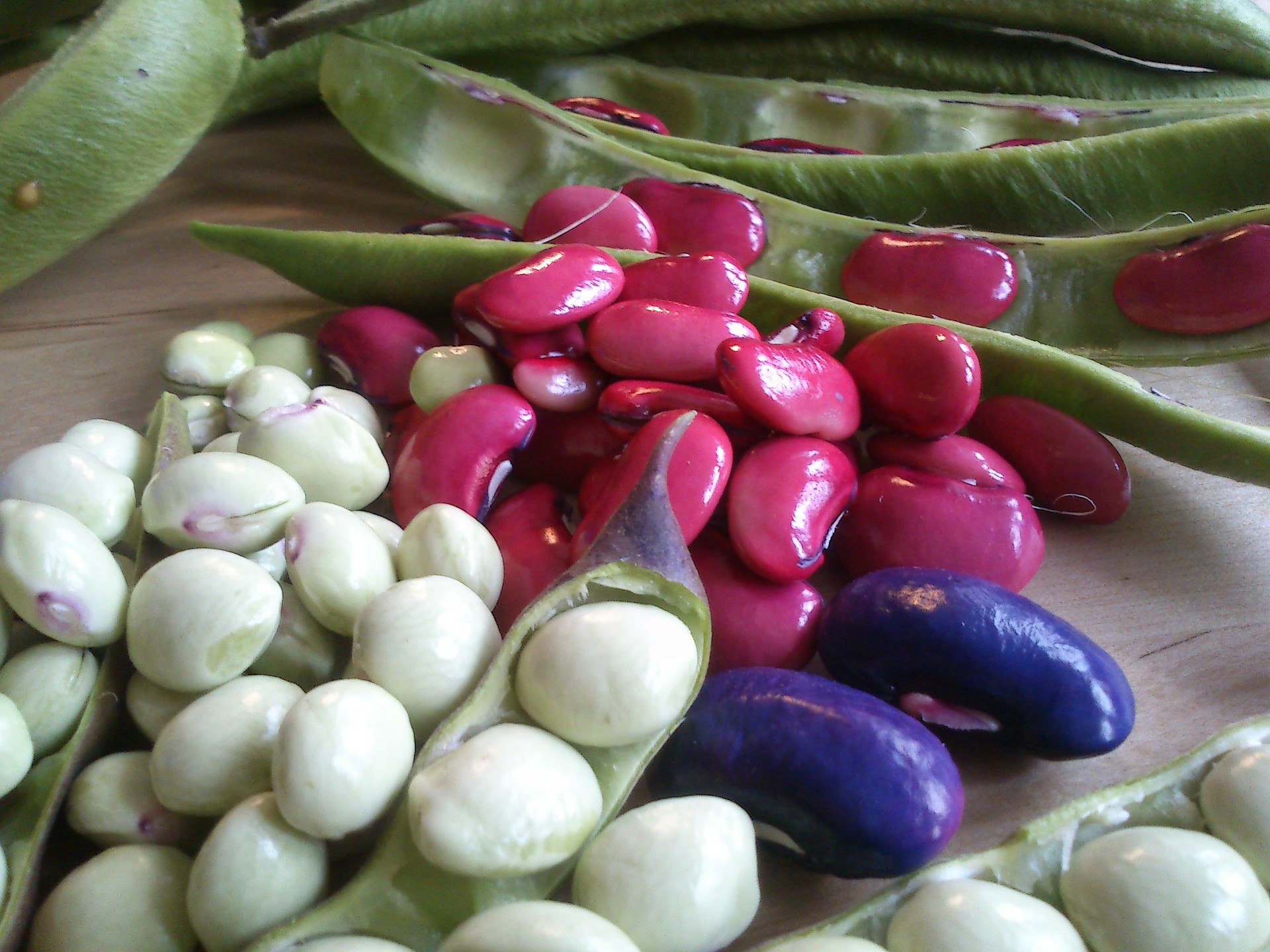
    Legumes have great potential in the transition to a more sustainable agriculture and a more sustainable diet. Unfortunately, legumes also have properties that are often not appreciated by consumers: beany taste, mealy structure and they cause flatulence.

    KFS aims to provide food manufacturers with a decision-making tool to help them choose the right legume type and process to match the desired taste, texture and nutritional values of the product they envision.

    KFS is working on projects with lupins and field beans because they offer the best prospects for Dutch arable farmers and at the same time offer favourable nutritional values.

    Asian cuisine has a centuries old tradition of using such beans as soy, lentils and mung in many dishes and snacks, often in a  fermented form. Pre-fermentation processing has been found to aid the nutritional quality of legumes. Fermentation with Bacillus, mould, Lactic acid bacteria and/or yeast decreases undesirable properties and improves flavour and texture.
    The above has been documented in detail through literary findings (Alyssa Be, 2021, WUR BSc thesis; Eloïse Jennes, 2021, UM MSc thesis).

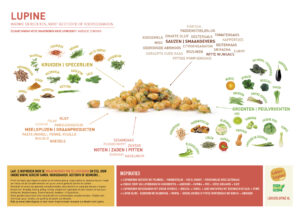
    Angélique Schmeinck made mind maps for Lekker Lupine and Keep Food Simple, two taste buds maps; one for cold preparations and one for hot preparations. Precisely because taste is a critical point with legumes, it is very important to learn how we can make tasty products with legumes. These taste mind maps are a first aid. Lupine-MM-koud Lupine-MM-warm

    The KFS-approach is multidisciplinary and combines

    • knowledge about fermentation processes and microbial strains
    • transformation of raw materials into consumer products by existing and novel processes
    • preparation of tasty foods, fit for consumers’ perception, by experienced chefs
    • nutritional characteristics like amino acid composition, bioavailability of (micro-)nutrients, presence of fibre
    • co-ordination in the supply chain
    • use of legumes grown in North Western Europe

    This approach can only be realized in collaboration with knowledge institutes and innovative companies.

    Partners in this KFS activity: Angélique Schmeinck, Food Tech Brainport, Lekker Lupine, Smaakpark Ede, Universiteit Maastricht, Wageningen University & Research

  • Bread and consumer perception

    Bread and consumer perception

    Bread is an important part of our daily nutrition. There is growing evidence that longer dough fermentation times result in tastier and healthier bread (‘slow or traditional breadmaking’) and this will improve our intestinal health. Consumers, though, are particularly overwhelmed by the information supplied by the media.

    Together with scientists from Maastricht University and Pandriks Bake Off, Keep Food Simple conducts research into the most important factors in consumer response. This allows us to communicate better about the meaning of bread in food.

  • Our new partner ‘Gravin van Bylandt Foundation’

    Our new partner ‘Gravin van Bylandt Foundation’

    We are proud to announce that the ‘Gravin van Bylandt Foundation’ has decided to become a sponsor of Keep Food Simple and will support our work on legumes. Their support is of great value, not only for financial reasons but also as a recognition for our goals and work.

    We want to stimulate the utilisation of the legume as its proteins are seen as a promising alternative to those in meat products. However the current meat replacers are generally high in salt and fat, and low in nutriënts. We take a completely different approach. Our goal is to use the whole legume where possible. We aim to develop healthy and tasty products using both old and new technology, thus offering farmers and consumers the opportunity to move away from meat as the main source of protein.

    More information on sponsoring can be found here.