Keep Food Simple

Author: KeepFoodSimple

  • Lupine – a valuable legume

    Lupine – a valuable legume

    Lekker Lupine and Keep Food Simple are going to work together to get more nutritional value from lupine on the Dutch dinner plates. We do this by combining knowledge about cultivation and properties of the lupine and using it for product development. This will allow a wider range of foods containing lupine to become available on the market. And the knowledge gained can in turn be applied to products with other legumes. In this way we work together on protein-rich, tasty and affordable food of plant origin.

    Do you also see opportunities for applications of lupine or other legumes and do you need more scientific or applied knowledge? Contact us!

  • Andries Gort retires from KFS-board

    Andries Gort retires from KFS-board

    As from December 31st 2021 Andries Gort has decided to step back as a member of the Board of Keep Food Simple.

    Andries has been a much appreciated source of inspiration and knowledge over the years. He has been with KFS since its start in 2016 and has made contributions, both in science and technology as well as in societal relevance. Even at his age (90), he has never lost his interest in food production, especially the area of bakery products and the utilisation of what nature has to offer. His focus was not just on new developments but also on lessons to be learned from the past.

    KFS is extremely grateful for Andries’ contributions, but we are excited to know that he will continue to explore possibilities for healthy and sustainable food, using his wide network in the food industry.

    By Peter Folstar, Chairman of the Board of KFS on behalf of all Board Members.

  • KFS-perspective for pulses as a protein source

    KFS-perspective for pulses as a protein source

    Pulses are a great source of plant-based protein and fibre; they contain several beneficial bio-active compounds like phytosterols, and their cultivation fits perfectly into a sustainable agriculture. In the Netherlands pulses are not frequently grown and consumed, partly because of the negative connotation as “poor man’s food”.

    But there is a growing interest in pulse foods since they provide health and environmental benefits. An example is the “Food Lab Pulses” project which resulted in six innovative products.

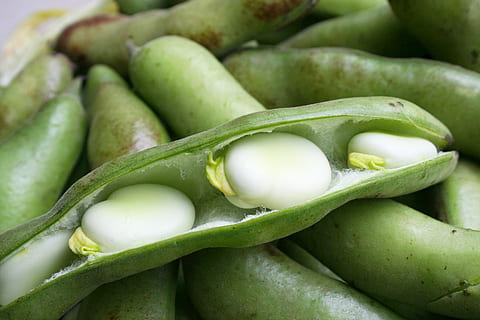
    Research commissioned by Keep Food Simple revealed promising findings in pilot fermentation of the entire Vicia faba bean. Eloïse Jennes, master student in Health Food Innovation Management at Maastricht University, fermented the faba beans with Lactobacillus strains and evaluated the effect on (1) the sensory properties and (2) the bio accessibility of phytosterols and minerals.

    Key results included the finding of vinegary and green sorrel aromas in the fermented beans which could mask the ‘beany flavour’. Eloïse found that beta-sitosterol was predominant and there are indications that fermentation increases the presence of other phytosterols and improves the accessibility of iron. In general iron, zinc and magnesium levels are high in pulses.

    All in all, fermentation did positively affect the sensory properties of faba beans. The nutritional quality regarding phytosterols and minerals, together with fermentation, seems to positively affect the bio accessibility of these nutrients.

    With these promising results, Keep Food Simple eagerly wishes to pursue its quest towards those plant-based and clean label food products that are made from fermented beans and have the potential to be an alternative to some of the meat products in people’s menus.

    Note: Eloïse Jennes’ excellent work has been supervised by prof. Koen Venema, Maastricht University.

  • Seminar KFS at Food Technology 2021 postponed to 2022

    Seminar KFS at Food Technology 2021 postponed to 2022

    KFS will hold a seminar at Food Technology on 14 April 2022 with contributions by Onno Franse, Peter Folstar and Fons Voragen. All are involved in KFS from the beginning.

    Food Technology is a two-day knowledge and network event about high-tech innovations in the food industry and it takes place on 13 and 14 April in ‘s-Hertogenbosch. For the programme click here.

    On the first day Remko Boom is keynote speaker and day two starts with a keynote by Jaap Seidell.
    Meet all Food Technology speakers here.

  • High acceptance of Pesto di Carciofi

    High acceptance of Pesto di Carciofi

    Currently only 10-15% of the artichoke plant is used for consumption. Keep Food Simple has developed a series of pestos using the edible remaining parts of the plant which are high in fibre, folic acid, minerals and phytonutrients.

    As a part of his MSc thesis (Maastricht University) Tom Marx reviewed the acceptance of these pestos through a questionnaire with 300 American consumers. The group consisted of 70% of millennials; the majority had a bachelor’s degree or higher, and the annual income was on average in the middle segment. Through theoretical packages, participants were asked to indicate their acceptance and purchase intentions.

    Overall there was a very high acceptance of the product; on a scale from 1 to 5 (1 being the best) the product scored a 2. In addition, participants were asked to indicate what they would pay for 100 grams (or 3.5 oz) of the product. Participants were willing to spend (depending on the marketing message on the package) between $4.16 and $4.68. Familiarity with artichokes and health and environmental motivation significantly improved acceptance. Food neophobia had little effect. The only group that did not accept the product were people who had never consumed artichokes.

    Additionally participants were asked if health claims such as ‘low in calories’ or ‘good source of dietary fibre’ improved the acceptance, but there was no significant advantage in using these claims. Finally it was concluded that a marketing strategy should be developed to increase familiarity with the product.

    More information on our projects can be found here.

  • Valorisation, a necessity for KFS

    Valorisation, a necessity for KFS

    Over the past five years we have developed a portfolio of scientifically outstanding projects, each of them following our ambition of the better utilisation of so far unused raw plant materials, less waste and healthier food products.

    Of course we have to ensure that the results of our work reach the consumer so we have developed a business model in which co-operation with leading business partners is the key. In return we expect to receive financial support, which is essential in developing future projects (revolving fund principle). All this will be carried out within the scope of our ANBI status.

    The transfer of KFS project results into attractive products and/or processes that will be accomplished under custom-made agreements with interested partners. KFS collaborates with Eunite, an external group with a proven track record in food-related business development. Additionally our KFS Advisory Board, with an extensive network in food businesses and valorisation, provides important guidance in these projects.

    Interested? Please contact Miel Margherita or Peter Folstar.

  • Health benefits of fibre from different plant sources

    Health benefits of fibre from different plant sources

    In the Netherlands, over 1 million people suffer from chronic bowel disorders, one major factor of this being that people do not eat sufficient fibre.

    However, research in recent years has indicated that the story is more complex. Not only the amount of fibre but also the mix from different plant sources will determine the beneficial effects. This mixture serves as a substrate for bacteria in the gut-microbiome. These bacteria produce small bio-active components that have positive effects on the fat and protein metabolism as well as on the  immune response. They also lower the risk of cancer and other chronic diseases.

    More research, however, is necessary to substantiate these effects. Within its aim of better utilising plant sources in a sustainable way, Keep Food Simple is delighted to have found considerable interest from our partners in Maastricht and Wageningen Universities, and we are also actively approaching food producing companies to participate. At this moment we are looking into funding opportunities. So, if you feel able to participate, please contact Dr Flip van Straaten by e-mail.

    More information on our projects can be found here.

  • Combinations of Vegetables for Better Health

    Combinations of Vegetables for Better Health

    In the Netherlands, over 1 million people suffer from chronic bowel disorders, one major factor of this being that people do not eat sufficient fibre. Additionally there is growing scientific evidence that not only the amount of fibre but also combinations from different plant sources will determine the beneficial effects. Fibre serves as a substrate for bacteria in the gut producing small bio-active components that have positive effects on the fat and protein metabolism as well as on the immune response.  They also lower the risk of cancer and other chronic diseases.

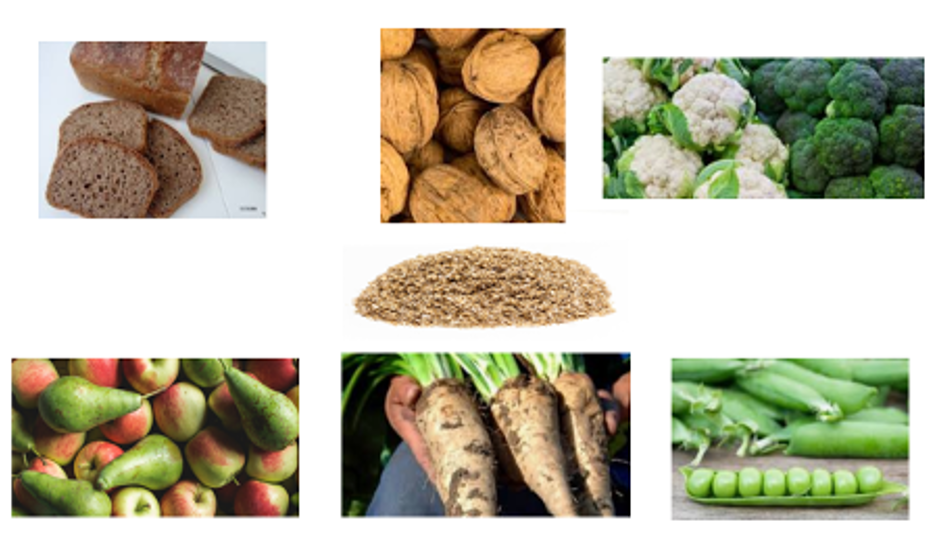
    More research, however, is necessary to substantiate these effects. In our project we will include combinations of beets and carrots, fruits, pulses, cereals and cabbages. Thereby Keep Food Simple aims to support the complete usage of the harvested vegetables. In doing so waste will be minimalised, and the full nutritional benefits will be made more readily available.

    However focus on the importance of eating more fibre-rich food has not led to the desired changes in our consumption pattern. There is not much evidence that the recommended level of a minimum of 35 gr of fibre per day will be reached in the foreseeable future. Neither will the consumption of combinations of plant products be seen as a priority, certainly not in the short term.

    In this project Keep Food Simple has chosen an integrated approach with the focus on both communicating the necessity of eating more and better fibre, as well as providing a real understanding of the effects of fibre on a healthy gut.

    The communication part of our project, which aims at a clearer message on the health benefits of vegetable food products to a wider audience, will be done in alliance with partners with a sizeable outreach to consumers and food professionals.

    Our first partner is Dutch Cuisine. They promote the preparation of good quality food using local ingredients and avoiding waste. Through an impressive group of ambassadors consisting of top restaurants and their chefs, the message of more and better fibre will be made available for professionals as well as for the general public.

    Next Keep Food Simple will also directly communicate our message through presentations and videos using social media.

    The science part will be done in collaboration with our partners in Maastricht and Wageningen Universities. Both have extensive experience in gut health research and the role of fibre.

    The current advice from the Voedingscentrum is: eat 35 grams of fibre per day. If our research confirms the importance of diversity of fibre from different sources, this could lead to the following recommendation by the Netherlands Nutrition Centre: eat fibre-rich complete food from different plant sources, because this is better for keeping your body healthy, with better weight control, resistance against illness but also better mental health.

  • Caroline van der Horst joins KFS-board

    Caroline van der Horst joins KFS-board

    Caroline studied Food Science and Technology at Wageningen University.

    She worked in various positions in R&D and Innovation Projects at NIZO Food Research, Hahn, Tate & Lyle and CNC.
    She is now active as an independent consultant in the agricultural and food industry working among others for Wageningen University and Research, Photanol, Mycelium Materials Europe, Boltthreads and VALA.

    Driving Sustainable Innovation in Food and Agriculture is her passion.

    Together with the other members of the KFS board, Caroline is committed to support the best possible use of agricultural raw materials.

  • Vine tomatoes

    Vine tomatoes

    In May 2021 KFS started a project to utilise the sort scrap of vine tomatoes. Our aim is to create innovative, attractive and healthy tomato-based products with unique sensory properties with a focus on drinks as well as on pastas. Potential combinations with other vegetables, fruits and herbs will also be included. Our processing methods include mild technologies and fermentation treatments using lactic acid bacteria.

    This project is not just about the creation of tasty products. By improving the bio-availability of important nutrients such as lycopene and vitamins, we will also support the availability of healthy tomato-based food.

    The project will be executed by a team consisting of Tania Utami (MSc Food Science), Nadi Nordkamp (student FHML Maastricht campus Venlo) under the guidance of Prof Koen Venema. Partners in this project include Wageningen University & Research, SmaakPark Ede and Looye Growers. Information: Em Prof Fons Voragen